Quick answer
How to market a self-published book: first make the Amazon listing convert (cover, description, price, categories and keywords), then build an email list, send advance copies to readers who may review it, plan a focused launch week, and grow sales with small, tested Amazon Ads. Start two to three months before launch, and spend money only on what you can measure.
Publishing a book is free and fast. Getting readers to find it is the hard part, because millions of books compete for the same searches. The good news is that self-published authors don’t need a big budget or a huge following. They need a clear plan and the discipline to fix the basics before buying traffic. This guide gives you that plan, step by step.
Key takeaways
- Fix the listing first. Ads and promotions can’t sell a book with a weak cover or description.
- Your email list is the one audience you own. Start it before launch.
- Free review copies are allowed, but you can’t require a review in return.
- Amazon Ads start from $1 a day; test small and keep only what sells.
- Marketing doesn’t stop after launch. Your next book is your best marketing.
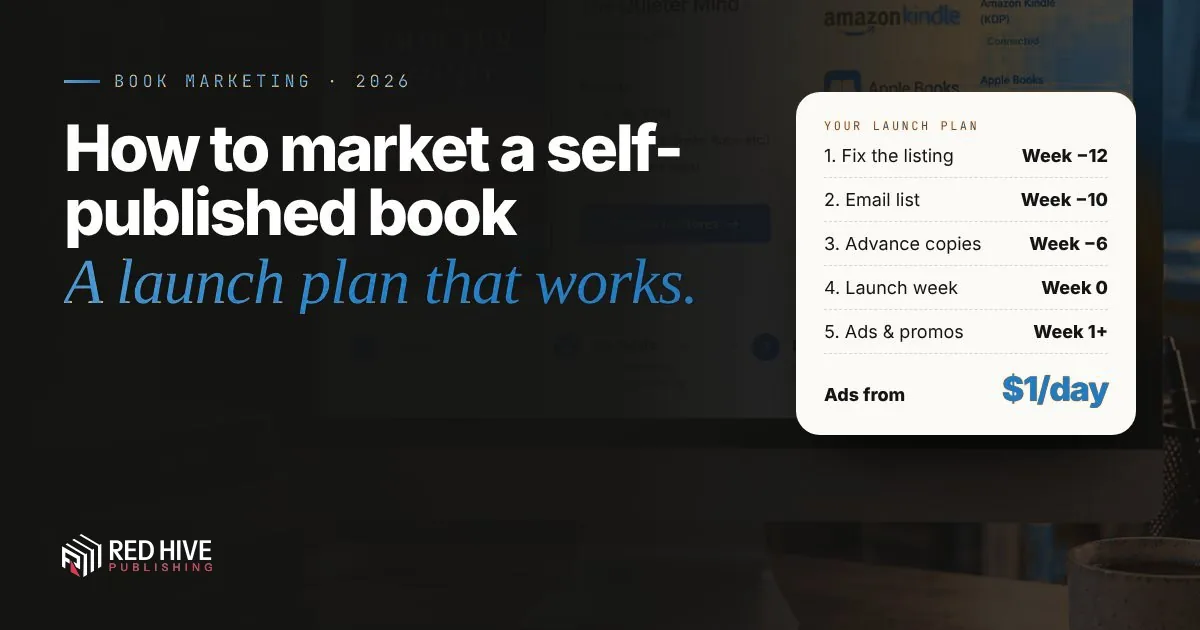
Your book marketing timeline at a glance
| When | Focus | Key tasks |
|---|---|---|
| 8–12 weeks before | Foundations | Cover, description, categories and keywords; author website or landing page; email sign-up |
| 4–8 weeks before | Early readers | Send advance copies; set up pre-order; line up promotion dates |
| Launch week | Momentum | Email your list; share with your network; run launch promotions; start small ads |
| Weeks 2–12 | Optimization | Follow up for reviews; test and refine ads; adjust price and keywords |
| Ongoing | Long-term growth | Content, promotions, series and the next book |
Step 1: Make your Amazon listing convert
Every other marketing effort sends people to your book page. If that page doesn’t convince them, you pay for traffic that doesn’t buy. Check these first:
- Cover: it must signal the genre instantly and still read as a tiny thumbnail. This is the single biggest factor in whether someone clicks. If yours doesn’t match bestsellers in your category, consider a professional cover redesign before spending on ads.
- Description: lead with a hook, not a summary. Use short paragraphs, end with a reason to buy now, and make the first two lines count, because that’s all many shoppers see.
- Categories and keywords: choose categories where your book can realistically rank, and fill all seven keyword slots with phrases readers actually type.
- Price: match the norms in your genre. For ebooks, Amazon’s 70% royalty band runs from $2.99 to $12.99 on Amazon.com.
- Look inside: the first pages must be clean, well formatted and engaging. They’re part of the sales pitch.
Our guide to how to publish a book on Amazon covers keywords, categories and pricing in detail.
Step 2: Build a small author platform you own
Start an email list
An email list is the most dependable marketing tool you’ll have. Social platforms change their algorithms and ad prices rise, but a list of readers who asked to hear from you is yours. Offer something useful for signing up: a bonus chapter, a short story, a checklist or a resource from your nonfiction book. Put the sign-up link on your website, in your social profiles and at the back of your book.
Set up an author website and Author Central
A simple author website gives readers, reviewers and the media one place to find your books, your bio and your sign-up form. Claim your Amazon Author Central page too: add a photo, a bio and links between your formats. You also need your books claimed there to run some Amazon Ads. If you’d rather not build a site yourself, our author website design service starts from $600.
Step 3: Get honest early reviews
Reviews give shoppers confidence. A book with no reviews is a risk to most readers, so plan for early reviews before launch day.
- Send advance reader copies (ARCs) four to eight weeks before launch to readers who enjoy your genre, beta readers and people on your email list.
- Make it easy: send a short reminder with the review link on launch day and again about a week later.
- Follow Amazon’s rules. Amazon allows free or discounted copies for readers, but you can’t require a review in return or try to influence it, and offering anything else, such as gift cards, can get reviews removed. See KDP’s customer review guidelines.
- Never buy or swap reviews. Amazon removes them and can take action against your account.
Tip: add a short, polite note at the end of your book asking readers to leave an honest review. It costs nothing and works for every copy you sell, long after launch.
Step 4: Plan a focused launch week
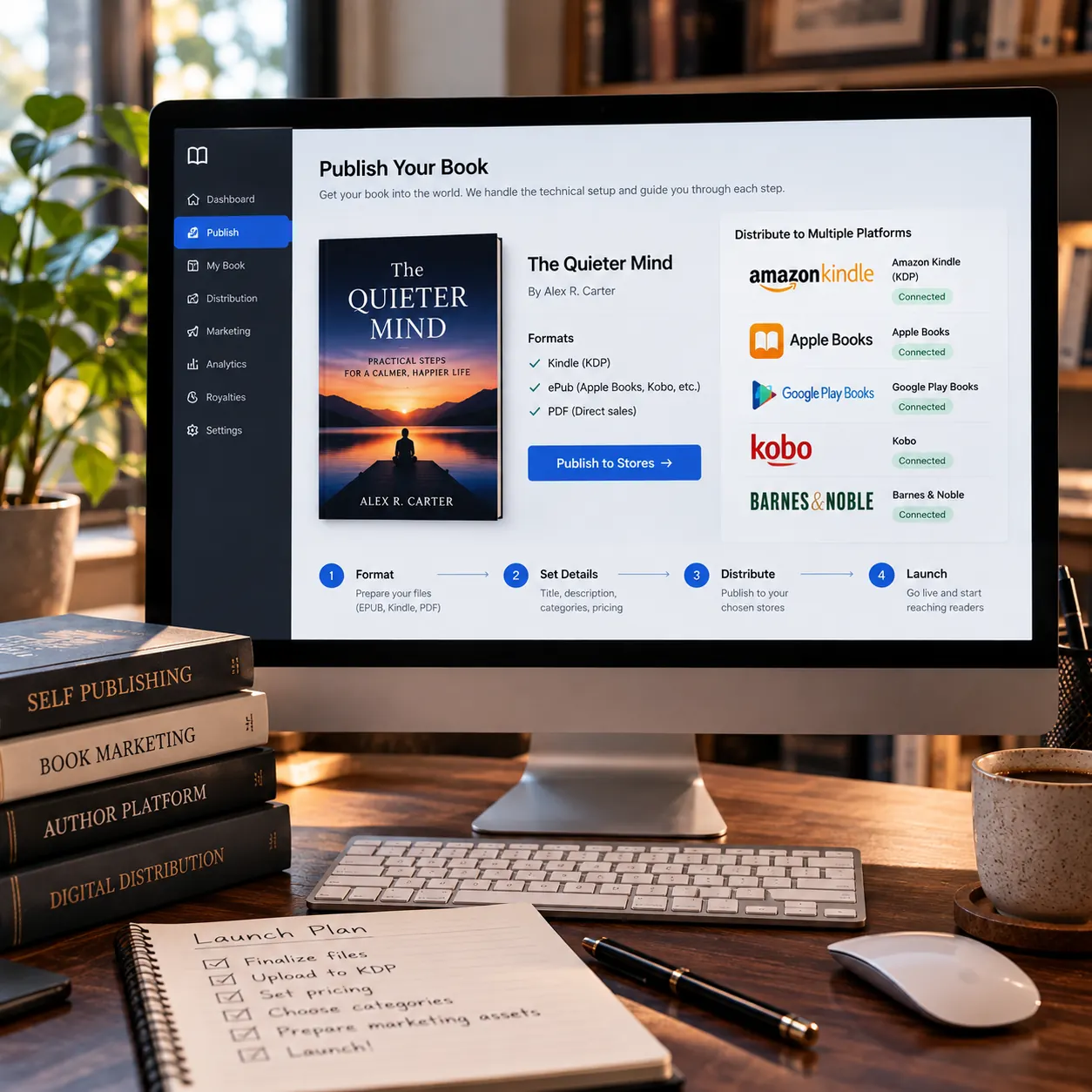
Concentrating sales and attention into a few days helps your book get noticed in its categories. A practical launch week looks like this:
- Day 1: email your list, post on your channels and tell friends, colleagues and communities who’d genuinely be interested.
- Days 2–4: run a launch price or promotion and, if it fits your budget, book a slot on an established ebook promotion site.
- Days 3–7: start small Amazon Ads campaigns, follow up with advance readers about reviews, and share early reader reactions.
Pre-orders help too: they let you share a link before launch and turn early interest into sales from day one.
Step 5: Use Amazon Ads, carefully
Amazon Ads put your book in front of shoppers who are already searching for books like yours, and you only pay when someone clicks. Amazon’s guide for authors covers the basics, and its FAQ lists a minimum budget of $1 a day, with around $10 a day suggested to keep ads running all day.
- Start with Sponsored Products using automatic targeting plus a manual campaign with specific keywords and comparable authors.
- Set a daily budget you’re comfortable losing while you learn, and review results weekly, not hourly.
- Watch clicks and orders, not just impressions. If a keyword gets clicks but no sales, the listing (or the targeting) is the problem.
- Cut what doesn’t work and move budget to the keywords and placements that sell.
Ads work best with a series or several books, because one reader can buy more than one title. With a single book, keep spending tight until you know your numbers.
Want a team behind your launch?
Book marketing that starts with your listing, from $500
We fix the foundations first (cover positioning, description, categories and keywords), then plan your launch and run Amazon Ads with honest reporting. No bestseller promises, just a clear plan. You keep 100% of your rights and royalties.
Step 6: Run price promotions
Temporary discounts bring in new readers, reviews and visibility. If your ebook is enrolled in KDP Select, you can run free book promotions for up to five days in each 90-day term, or Kindle Countdown Deals. Free days work best for the first book in a series or when you have another book to sell. Announce promotions to your list and on promotion sites in your genre so the discount is actually seen.
Step 7: Keep readers finding you
- Short video: book trailers and short clips work well on TikTok, Instagram and YouTube Shorts, especially for fiction. A professional book trailer starts from $350.
- Useful content: for nonfiction, articles, talks and podcast interviews on your topic bring in readers who are already searching for help.
- Communities: join genre groups and reader communities as a reader first. Constant self-promotion turns people off.
- Local and niche media: local newspapers, radio, libraries, bookshops and industry newsletters often welcome stories from local or expert authors.
How much does it cost to market a self-published book?
| Budget | What it covers |
|---|---|
| $0–$100 | Listing optimization, Author Central, email sign-up, advance copies, organic posts, KDP Select free days |
| $300–$800 | The above plus small Amazon Ads tests and one or two promotion-site slots |
| $1,000+ | Professional campaign management, a book trailer, an author website and sustained ads |
Illustrative ranges, not quotes. What you need depends on your genre, number of books and goals.
Marketing sits alongside your production costs. Our guide to what it costs to self-publish a book covers editing, covers and formatting, and our publishing packages include promotion extras in the Author Bestseller package.
Book marketing mistakes to avoid
- Buying ads before fixing the listing. You pay for clicks that don’t convert.
- Launching without reviews. Line up advance readers weeks ahead.
- Buying reviews or using review swaps. It breaks Amazon’s rules and risks your account.
- Only posting “buy my book”. Give readers a reason to follow you beyond the sales pitch.
- Stopping after launch week. Most books sell steadily over months, not in one spike.
- Paying for vague promises. Avoid any service that guarantees bestseller status without a clear plan.
The bottom line
Knowing how to market a self-published book is mostly about order: fix the listing, build a list you own, get honest early reviews, focus your launch, then grow with small, measured ads and promotions. Do the basics well and every dollar you spend later works harder.
Want help with your launch or a book that’s already live? Tell us about your book and we’ll send a free, written marketing plan and quote within one business day.
Frequently asked questions
How do I market my self-published book with no money?
Start with what costs nothing: a strong book description, the right categories and keywords, an Author Central page, a simple email sign-up, and advance copies for readers who might review the book. Share useful content where your readers already spend time, and use KDP Select free days if your ebook is enrolled. Add paid ads only once the listing converts.
When should I start marketing my book?
Ideally two to three months before launch. That gives you time to send advance copies, build a small email list, set up your Author Central page and plan launch-week promotions. If your book is already out, it’s not too late: fix the listing first, then restart with reviews and small ad tests.
How much should I spend marketing a self-published book?
Many authors start with a few hundred dollars over the first three months, mostly on Amazon Ads and one or two promotion sites, and increase only what pays off. Amazon Ads lets you start from $1 a day, and Amazon suggests around $10 a day to keep ads running all day. Spend nothing on ads until your cover, description and price are right.
Can I give away free copies in exchange for reviews?
You can give free or discounted copies to readers, but you can’t require a review in return or try to influence what they write, according to Amazon’s rules. Offering anything else, such as gift cards, can get reviews removed. Never buy reviews or swap them with other authors.
Do Amazon Ads work for books?
They can, especially for genre fiction and practical nonfiction with a strong cover and listing. Start with a small daily budget, use specific keywords and comparable authors, and pause ads that spend without selling. Ads amplify a listing that already converts; they can’t fix one that doesn’t.
Is social media necessary to sell books?
Not for every author. It helps most when you enjoy it and your readers are active there, for example on BookTok for romance and fantasy. An email list and a well-optimized Amazon listing usually matter more than follower counts, because you control them.
Should I hire a book marketing service?
Consider it when you don’t have time to run ads and outreach yourself, or when you’ve tried and sales haven’t moved. Look for clear deliverables, a written plan and honest reporting, and avoid anyone who promises bestseller status or guaranteed sales. Our book marketing services start from $500.
Our editors, designers and KDP specialists publish books for independent authors every week. This guide reflects the prices and Amazon rules we work with daily, and we update it when they change. More about us.